Software Project Rescue
Software project rescue starts with reading the whole codebase before anyone touches it: a build that stalled, a developer or an agency that left mid-way, or a product in production that keeps breaking. Within 48 hours you get a written verdict on what is recoverable, then the work runs in the order of its list: access back in your name, production stabilized, the fixes, the deliveries that never came. One person answers for it from then on.
Read first: the 48-hour audit
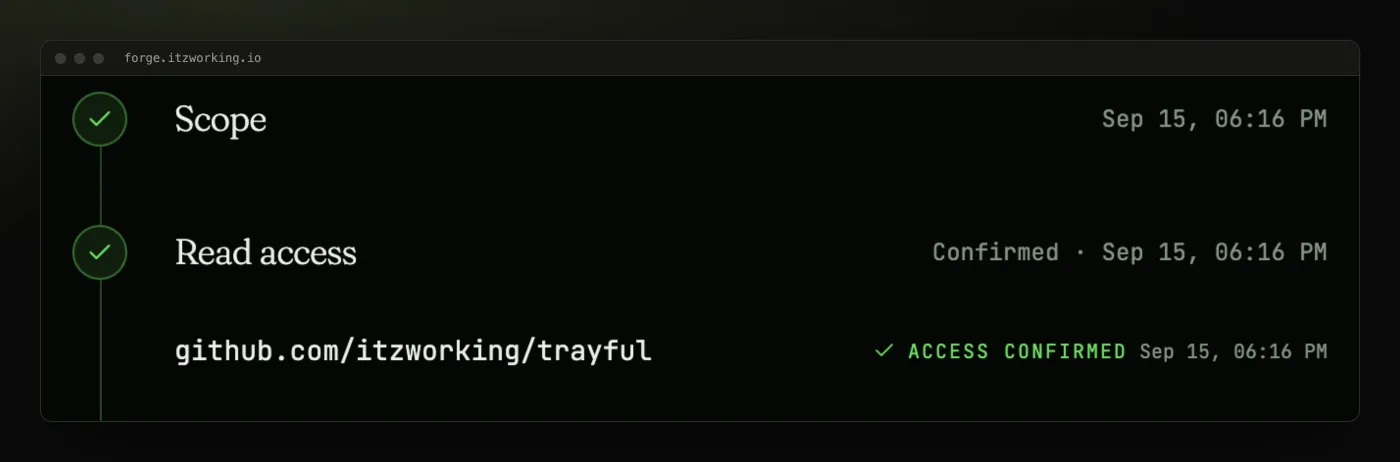
Nothing is rewritten, restarted or promised before the code has been read. The rescue opens with our code audit services: you connect the repository read-only, the whole codebase is read, and within 48 hours of access you hold a written verdict and a one-hour debrief.
The verdict says what is recoverable. Its four chapters are the state of the system, what breaks next, the fix list, and what we would do if it were ours. The fix list is ordered by damage, each fix priced, and the last chapter is already the plan for the first month of the rescue.
If the audit says the project cannot be saved as it stands, you keep the verdict and the plan, and you decide with them in hand.
Back on track, in order
A stalled project is put back on track in a fixed order, so the first days buy safety before they buy features:
- Access and accounts recovered into your name: the code, the hosting, the domain, the service accounts, the secrets out of the code and in your name.
- Production stabilized: backups verified with a restore rehearsed for real, monitoring on every error, the failures the audit ranked first fixed first.
- The fix list, in the order of damage, each fix priced before it starts.
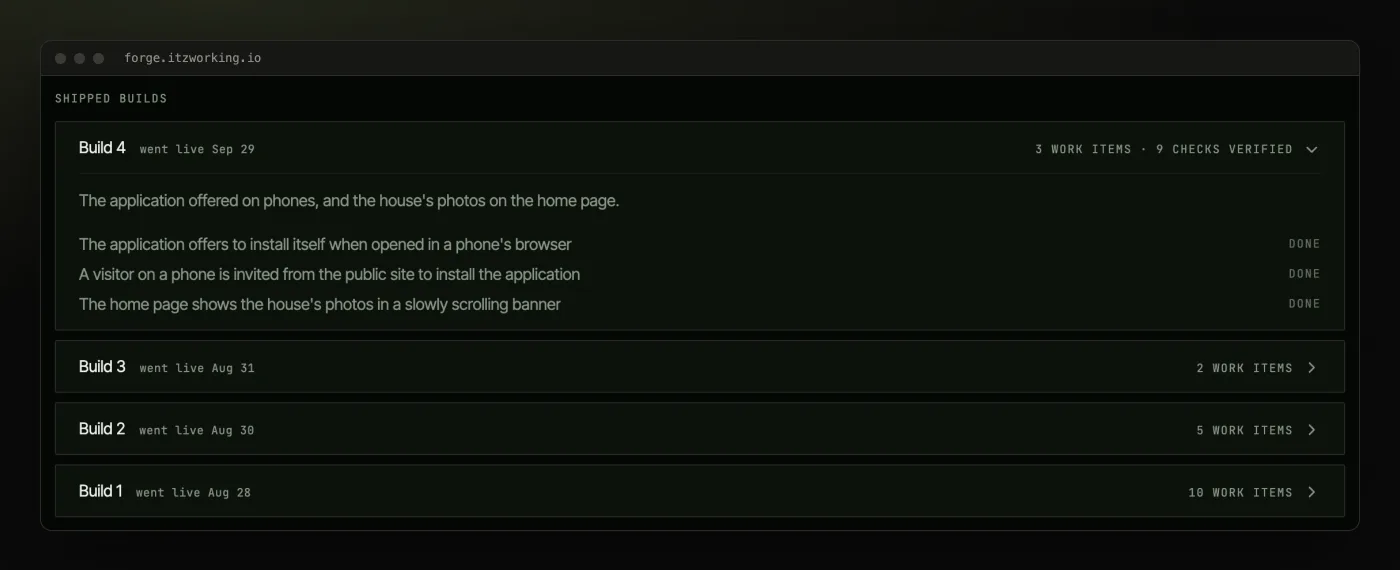
- Then the deliveries the previous provider never shipped, each scoped and priced as its own request, visible in your portal with the acceptance criteria it is checked against.
Each fix is checked against criteria you can read, and a defect in a fix we shipped is ours to correct at no charge for as long as we run the product.
How pricing works
The first step has a flat price and a clock, both on the code audit services page: the whole codebase read, the verdict in writing, the debrief. Nothing else is sold before it.
The rescue itself runs in La Résidence: a guarantee plus the work, never hours. The guarantee is one fixed line a month, keeping the product running sits inside it with no line removable, and each piece of work on top is priced before it starts, in a request you can read. The audit is credited against that first month. The figures are in the pricing section below.
If the audit says no, you keep the verdict and the plan; nothing else was bought.
When a developer or agency leaves mid-way
The most common case is a developer or an agency gone before the end, with the code, the accounts or both still in their hands. What is asked of them is written down and short: the repositories, the hosting and domain accounts, the environment variables, the third-party dashboards, the documents they hold. A previous developer who still answers usually hands these over in a day once the list is exact.
When they no longer answer, the host and the registrar can return what is in your company's name, and what cannot be recovered is recreated in your name: a new deployment, new keys, new service accounts, with the audit saying what runs where. Then the takeover of a half-built product follows the order above: audit, access, stabilize, fix, finish.
The stack does not change the path. A Laravel or Rails application, a Node and TypeScript product, a Django or PHP back office is read in 48 hours and taken over as it is; a migration is proposed only when the audit says it pays. A founder looking for a developer to take over the app starts at the same first step, whatever the code is written in.
Rescue, recovery, takeover: what the names mean
The providers on this search call the same work by different names. A software project rescue company sells the turnaround of a build that went wrong; software rescue services and software project rescue services cover the same ground with a wider net. Software project recovery services sometimes means recovering a failed project and sometimes recovering from a disaster, a backup restored: here that restore is the second item of the order above, not the service. Software project rescue for startups is the same path with a smaller team on the client's side and a product that has to keep selling while it is fixed.
Whatever the name, the path here is the one on this page: read, recover access, stabilize, fix, finish. No name adds a promise the audit has not made in writing.
No forced rewrite
A rescue is not a rewrite. Rewriting loses what already works, and it is what a successor most often proposes because it is easier to quote than to read. Here what holds is kept, what breaks is fixed, and a rebuild is proposed only when the audit says so, in writing, with what it costs against keeping.
When the verdict is a rebuild, it is scoped like a new product, from what the current one does, in the Forge: see MVP Development Services.
Who it is for, and who it is not for
For
- A founder or an SME with bespoke software whose build stalled or shipped late.
- A product abandoned mid-way by a developer or an agency, with the code or the accounts still in their hands.
- A product in production that keeps breaking, with nobody left who can fix it.
Not for
- A new product from an idea: that is MVP Development Services.
- A product that runs and only needs keeping, with no emergency: Software Maintenance and Support Services.
- A penetration test, or IT support for computers and networks.
- A founder who wants to run the product alone after the rescue, each change asked of agents and priced on its own: ITzWorking Agents.
After the rescue, one person keeps answering for the product; for a founder without a technical background, that engagement is described on Fractional CTO for Non-Technical Founders.
Questions founders ask
What is software project rescue?
Taking a software project that went wrong, a stalled build, an abandoned product, a production that keeps failing, and getting it to a working, owned, maintained state without starting over. Here it starts with the audit and runs in the order above.
How do I know my project needs rescue?
Deliveries slip with no date, the provider answers slower every week, you do not hold the code or the accounts, or users find the bugs before you do. Any one of these is enough to read the code; the audit says the rest.
How fast can you start?
The audit starts the moment the repository is connected and delivers within 48 hours; there is no meeting before the verdict. The first month's plan is its last chapter.
Can every project be rescued?
No. Some code is not worth keeping, and the audit says so in writing, with what a rebuild would cost against what keeping would. You keep the verdict and the plan either way.
My developer left: who maintains the app?
From the audit onward, we do: access recovered into your name, backups and monitoring on, then the fixes in order, under the guarantee of La Résidence. If you would rather run it alone, ITzWorking Agents do each change you ask for, priced one by one.
How much does a rescue cost?
The audit has a flat price, shown on its page. The rescue after it is La Résidence: a fixed guarantee a month plus the work, each piece priced before it starts, with the audit credited against the first month. The figures are in the pricing section below.
What La Résidence costs
A guarantee plus the work, never hours.
- The guarantee, €1,200 a month: incidents taken within two business hours, Monday to Friday, 9:00 to 18:00 Paris time. Miss one, and that month's guarantee is free.
- The work: at least 5,000 credits a month, each request priced in credits before it starts.
- From €3,975 a month in total, on a twelve-month engagement billed monthly.
- It starts with the audit: €2,000, the whole codebase read in 48 hours, credited against your first month.
Seats are capped. When they are full, the audit still runs, the verdict is still yours, and the next free seat is offered in order.
How we work together
- The audit first: you connect the repository, and the code and the infrastructure are read end to end, with a written verdict and a plan.
- The debrief: one hour on the verdict, the plan on the table, your questions answered.
- Monitoring, backups and access set up in your name, then a monthly rhythm of fixes and improvements.
- Every piece of work priced before it starts, and visible while it runs.
Who answers for it
Julien Casse, founder of ITzWorking. Shipping software since 2010: fintech in Luxembourg, then co-founder and CTO of kodehyve, from sole developer to a team of twenty.
He reads the code himself and makes the calls the model cannot. The client list is short on purpose: one named person answers for your product. Read more about the founder
Software Project Rescue