Vibe Coding Rescue
Vibe coding rescue for a product you built with Lovable, Bolt, Cursor or Claude Code, that is live with users and breaks a little more with each prompt: I read the whole codebase in 48 hours, then take the product over, fix it in order and keep it running. It starts with the free 48-hour code audit: two written pages on what is solid, what is defective and what breaks next. No meeting needed before the audit.
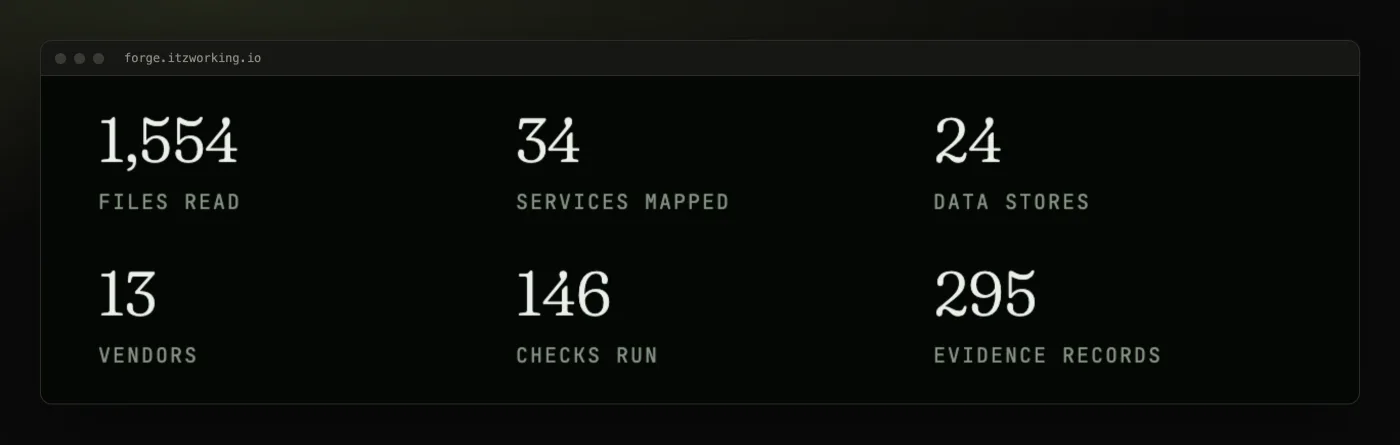
What the rescue covers
Four things, in the order a founder asks for them.
- The code read whole, for the first time. That read is the free 48-hour code audit: two written pages on the state of the system, each defect with its severity, and what breaks next. What that read looks for in a product built with an AI tool is on Vibe Coded App Audit.
- Everything in your name. Your product moves into its own space, and the accounts, the domain, the repository and the hosting are in your company's name.
- The defects fixed in order, the most severe first. Each fix is priced before it starts and checked against criteria you can read.
- Then the product run, watched and improved every month, by one person who answers for it.
Nothing is rewritten to start: the product is taken over as it is.
The providers on this search call the work a vibe coding rescue service, or a vibe code rescue.
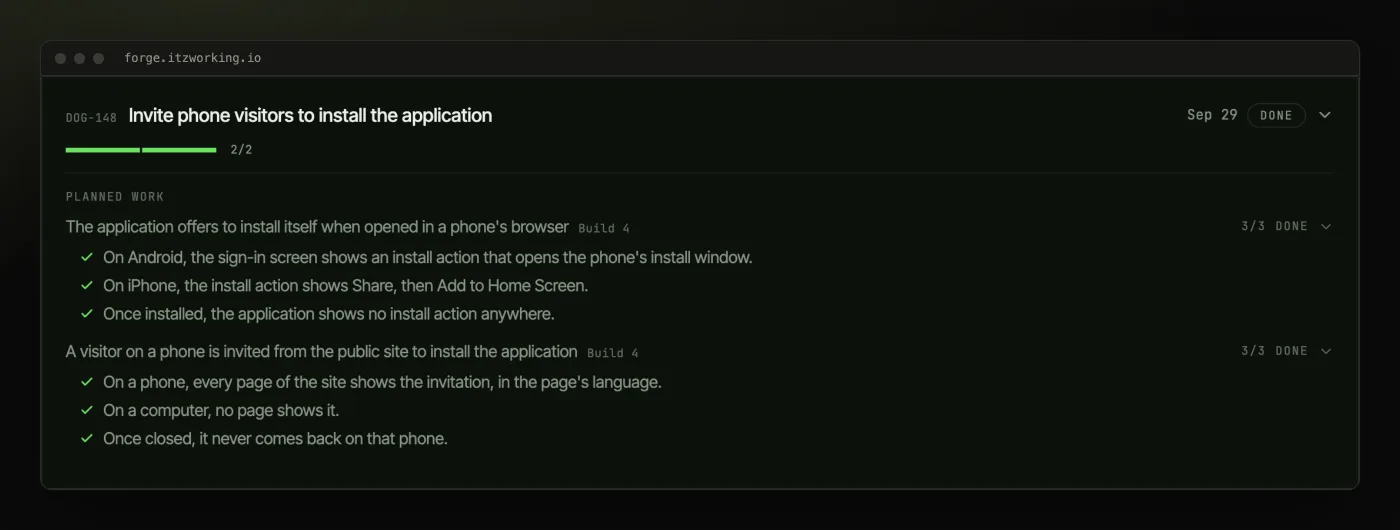
A vibe coded app rescue, in order
A vibe coded app rescue starts with a read, because no engineer has read this code. You wrote the prompts and the tool wrote the rest. Until someone reads it whole, nobody can say what a fix will touch.
Then the product moves, before anything is fixed. Wherever the tool put the accounts, inside the builder's platform or under a personal login, they go into your company's name first, so every fix lands in a place you hold.
Only then comes the first fix, and it is not the bug you last tried to prompt away. It is the most severe defect the audit named. The steps are under How it works, below, and they do not end on a handover.
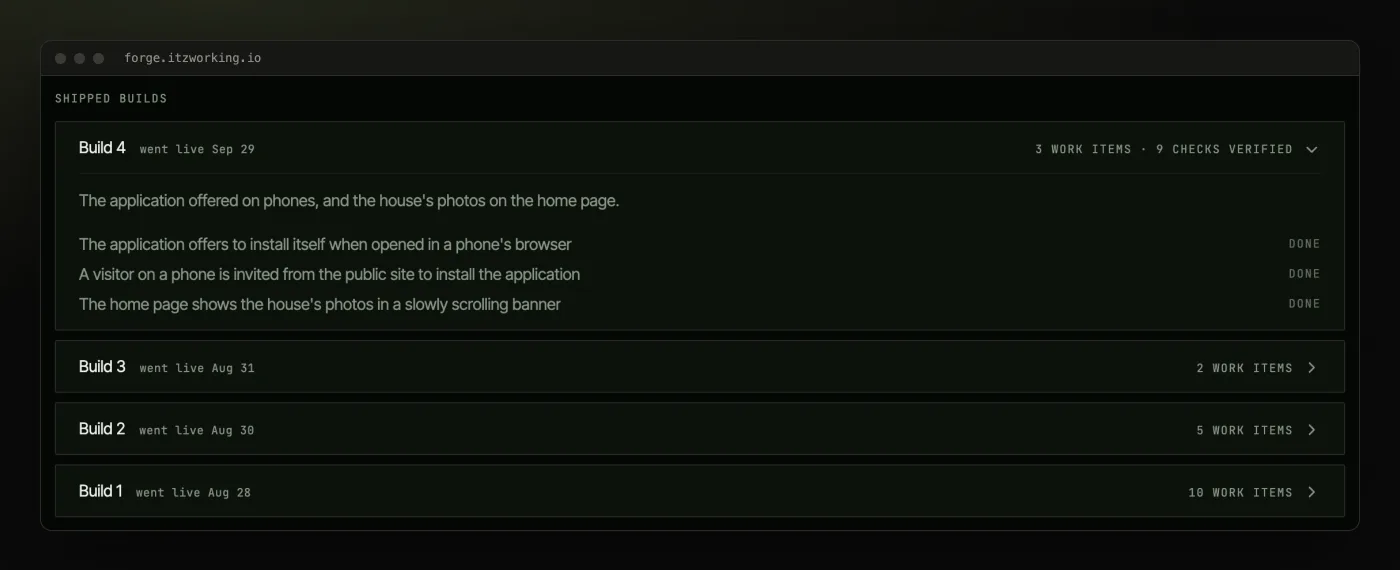
Vibe code cleanup: the first weeks, not a one-off
The cleanup is the first weeks of the engagement, right after the audit. It is not sold as a fix with an end.
What those weeks hold:
- The defects the audit named, the most severe first: whether that is a key left in the code, an access rule that lets one user read another's rows, or a payment flow the tool wired without asking.
- Test and production as two environments, so a fix is validated on test before it goes live.
- Nightly backups, with a restore rehearsed for real.
- Every error caught the second it fires, day and night.
- Dependencies brought current and kept there.
- Every change checked against its acceptance criteria before it merges.
Elsewhere on this search a cleanup is most often a fix with an end. Here the list is the start: the person who cleaned the code is the one who answers for it afterwards.
How pricing works
The audit is free, and the takeover itself is never billed.
After the audit, the rescue runs in La Résidence: a guarantee plus the work. Nothing is sold outside it: no fix by the piece, no cleanup on its own. Each piece of work is priced before it starts, in a request you can read.
Elsewhere on this search, the first step is commonly a discovery call, a paid assessment, or both, and the answer takes from a few days to three weeks. Here it is free, written, and yours within 48 hours of repository access.
The figures are in the pricing section below.
And run it afterwards: vibe coded app maintenance
A product built with an AI tool has nobody behind it once it works. Vibe coded app maintenance, or AI-built app maintenance, is the part of the rescue that does not end:
- An incident is taken within two business hours and owned until the fix is live and its cause written down. Miss that once, and that month's guarantee is free.
- If something I shipped breaks, fixing it is free, for as long as I run your product.
- The product improves every month: small changes live within days, bigger ones priced before work starts.
- A digest every Friday and an itemized statement every month say what the month was for.
For a product that runs and only needs keeping, with nothing to rescue: Software Maintenance and Support Services.
AI-built app rescue, whatever the tool
Lovable, Bolt, v0, Cursor, Claude Code, Replit, and the Supabase or Firebase project behind them: an AI-built app rescue reads the code, not the tool. Some pages call the same work AI app rescue.
It is done without a rewrite. What the prompts built that holds is kept, your users keep the product they know, and no rebuild is proposed before the code has been read. You decide with the audit in hand.
Who it is for, and who it is not for
For
- Non-technical founders and small companies whose product was built with AI tools, is live with users or paying customers, and keeps breaking.
- Startups whose first version was built by prompt and now carries customers it cannot afford to lose.
- A founder who has spent months of credits and prompts on fixes that each broke something else.
Not for
- An app that is not live yet.
- A product whose developer or agency left: Software Project Rescue.
- A founder who only wants to know what is wrong: Vibe Coded App Audit.
- One bug fixed, then goodbye.
- A company with a CTO or its own developers.
- A penetration test.
Questions founders ask
Rescue or rebuild?
You cannot check a rewrite quote without reading the code, and that is the part you cannot do. So the code is read first: in 48 hours you know what is solid, what is defective and what breaks next. The product is then taken over as it is, with no rewrite to start.
How do I fix a vibe coded app?
Stop prompting fixes one by one, and have the whole code read once by someone who will answer for the result. Then fix by severity, not in the order the bugs showed up, with each fix checked before it goes live.
Why does a Lovable app break once real users arrive?
A prototype is tested by the one person who built it. Real users bring several accounts on the same data, payments, and changes made while people are using the product. Nobody has read the code whole, so nobody can say which of these it was built for. The audit is that read.
How long before the first fix is live?
The audit is delivered within 48 hours of repository access. The first fix from the audit is live within 7 days of moving in, or the first month's guarantee is free.
Who owns the code and the accounts?
You do. The accounts, the domain, the repository and the hosting are in your name. After the first month you can leave with the audit, the documentation and everything in your name, and owe nothing more.
Can you fix just one bug?
No. One bug fixed in code nobody has read is the next prompt under another name. The fix comes with the read before it and the person answering for it after.
How much does a vibe coding rescue cost?
There is no rescue package to buy. The audit is free, the takeover is never billed, and each fix after that is priced before it starts, inside La Résidence. Its figures are in the pricing section below.
What La Résidence costs
A guarantee plus the work, never hours.
- The guarantee, €1,200 a month: incidents taken within two business hours, Monday to Friday, 9:00 to 18:00 Paris time. Miss one, and that month's guarantee is free.
- The work: at least 5,000 credits a month, each request priced in credits before it starts.
- From €3,975 a month in total, on a twelve-month engagement billed monthly.
- The first fix from the audit is live within 7 days of moving in, or the first month's guarantee is free.
- After the first month you can leave with the audit, the documentation and everything in your name, and owe nothing more.
How it works
- The audit first: you give access to the repository, and I read the whole codebase in 48 hours. You receive a two-page written audit: the state of the system, each defect with its severity, and what breaks next.
- The report is yours whatever you do next. If you want the defects fixed, the takeover starts.
- Monitoring, backups and access set up in your name, then a monthly rhythm of fixes and improvements.
- Every piece of work priced before it starts, and visible while it runs.
Who answers for it
Julien Casse, founder of ITzWorking. Shipping software since 2010: fintech in Luxembourg, then co-founder and CTO of kodehyve, from sole developer to a team of twenty.
He reads the code himself and makes the calls the model cannot. The client list is short on purpose: one named person answers for your product. Read more about the founder
Vibe Coding Rescue